
STEAM + SKATE Camps
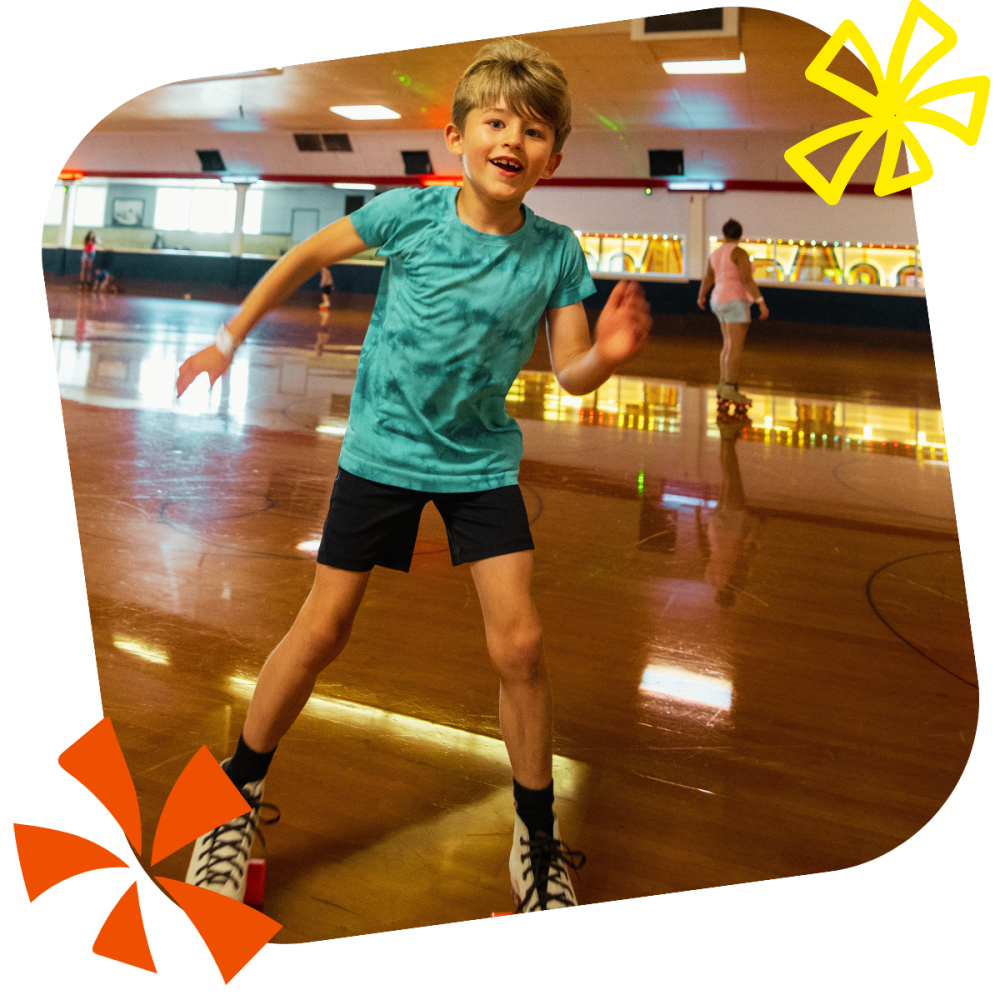
Every day at Oaks Park STEAM + SKATE Camp combines hands-on science, creativity, and active play. Campers explore real-world concepts through experiments, crafts, roller skating, and interactive challenges—all while discovering how science and engineering come to life throughout Oaks Park. Each morning begins with games and group activities that help campers build friendships and prepare for the day's adventures. Throughout the day, children complete activities in their personal camp journals, enjoy supervised experiences, create projects to take home, and participate in engaging lessons designed specifically for their age group. Registration is open to kids in grades 1 through 8.
- 9 AM Arrival & Drop-Off
- 9:30 AM STEAM Activites & Snack
- 12:30 PM Half Day Pickup / Full Day Lunch
- 1 PM Skating, Arts & Crafts, & Other Activities
- 2:45-5 PM Full Day Pickup
Dates
1-Day Camps- October 30, 2026
- November 11, 2026
- January 18, 2027
- February 15, 2027
- April 9, 2027
- May 31, 2027
- November 23-25, 2026
- December 21-23, 2026
- December 28-30, 2026
Spring Break camp info coming soon.
Times
- Full Day 9 AM-5 PM
- Half Day 9 AM-12:30 PM
Snack & Lunch
Camp registration includes a snack each day. For children with special dietary needs, please pack a snack.
For full-day camps, please pack a lunch or send lunch money for the concession stands.
Capacity
Camps are limited to 40 campers. Register early to guarantee your spot.
Fees
1-Day Camps- Full Day: $75 per day
- Half Day: $40 per day
- Full Day: $195 per week
- Half Day: $120 per week
During the 3-day camp weeks, you may opt to register for any single day or the full event series.
Registration opens 90 days in advance. The full fee is due at the time of registration.
STEAM Camp FAQ & Policies
Before registering, review the policies.
Registration & Payments
Our brand-new STEAM Camp program is only open to students in 1st through 8th grade during the 2026/2027 school year.
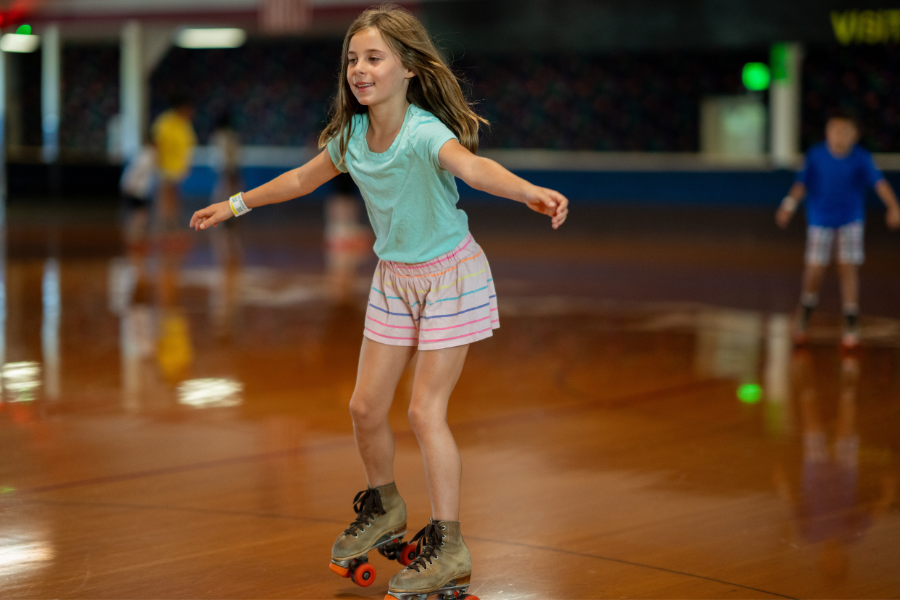
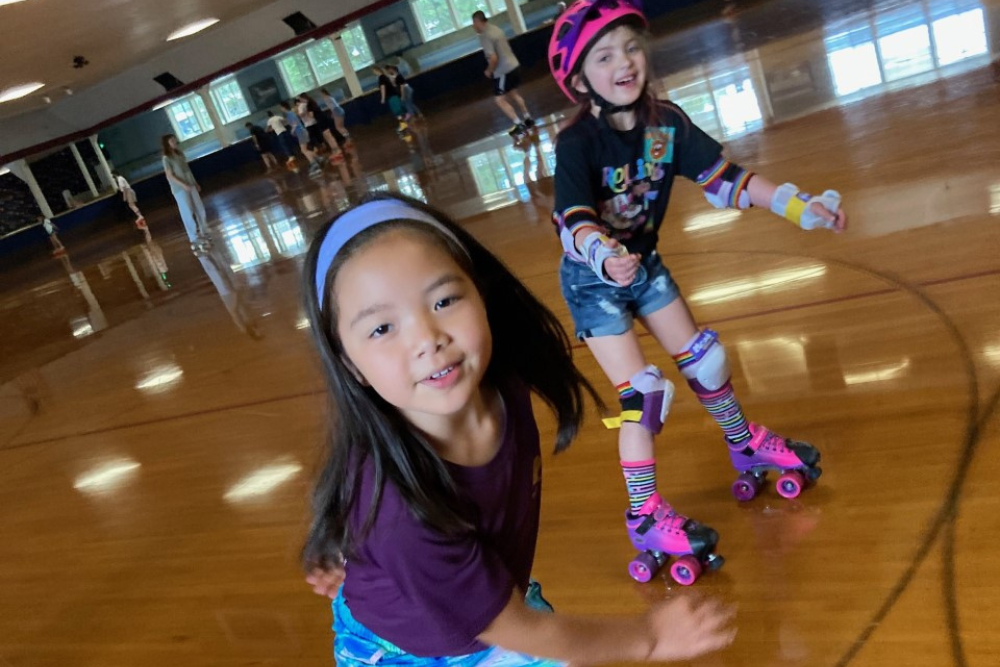
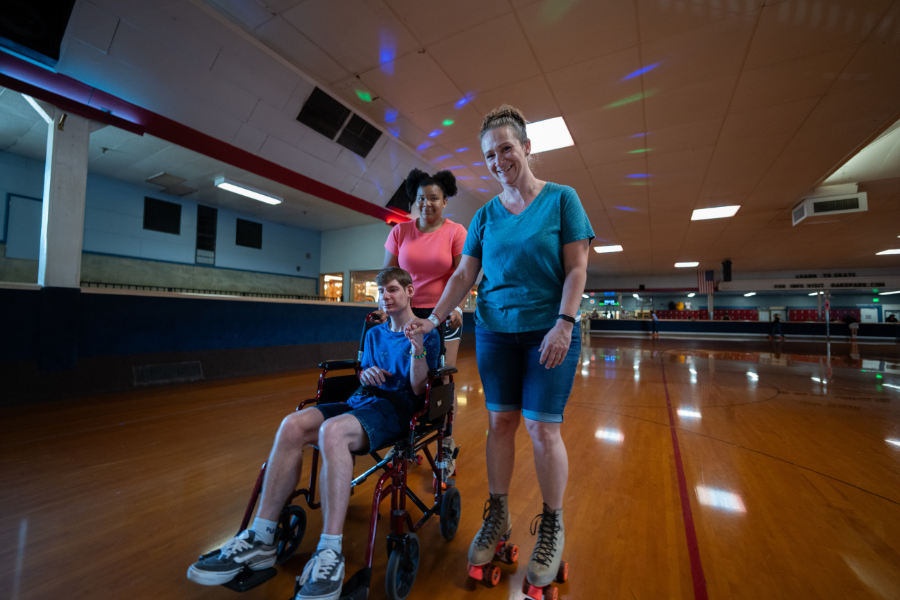
Camp activities include roller skating. All skating abilities are welcome.
Camp Dates:
-
1-Day Camps
- October 30, 2026
- November 11, 2026
- January 18, 2027
- February 15, 2027
- April 9, 2027
- May 31, 2027
- November 23-25, 2026
- December 21-23, 2026
- December 28-30, 2026
- Full Day: 9 AM-5 PM
- Half Day: 9 AM-12:30 PM
Spring Break camp info coming soon.
Camp Times:
To register, visit oakspark.com/steamcampreg. A credit or debit card is required for online registration.
You will register under your name and provide the child's name at check-in on the first day of camp.
If you wish to use a Chipper Card to pay for your registration, call 503-233-5777 or email weborders@oakspark.com M-F between 9 AM and 4 PM.
The full fee is due at the time you register.
1-Day Camps
- Full Day: $75
- Half Day: $40
- Full Day: $195
- Half Day: $120
During the 3-day camp series, you may opt to register for any single day or for the full event series.
You may cancel up to 7 days before the first day of camp and receive a refund of 50% of the registration fee. Email weborders@oakspark.com to cancel.
If you cancel less than 7 days before the first day of camp, you forfeit the fee in its entirety.
Oaks Park only accepts card payments at all locations, including ticketing windows, games, concessions, retail locations, parking meters, etc. You can pay for purchases using Visa, Mastercard, American Express, Discover, a debit or prepaid card, or a Chipper Card. Select locations also accept Apple Pay and Android Pay.
What if I only have cash?
- ReadyCard cash-to-card machines are available to convert cash to a prepaid card. Cards can be loaded with $1-$500. ReadyCards cannot be reloaded.
- If you do not use all of your preloaded funds during your visit, you can use the card offsite anywhere in the U.S. that Mastercard is accepted.
- ReadyCard machines are located near Guest Services, near the shooting gallery in the historic Blue Streak building, and in the Roller Rink lobby.
- You can check your card balance at the onsite kiosk, by calling the number on the back of the card, or by visiting rcbalance.com.
- Keep your ReadyCard receipt. If you have issues with your card, you can call the number printed on it, and if you have your receipt, a representative from the card company will be able to help you. Unfortunately, if you do not have your receipt, there’s nothing we can do.
Safety & Mandatory Waivers
Roller skating is a physical activity with an inherent risk of injury; you assume the risk of injury by participating.
All visitors participating in roller skating must complete a waiver. A parent or guardian must fill out waivers for minors. Any individual who does not have a waiver on file will not be able to skate.
It is your responsibility to ensure that each of your guests has completed a waiver before your visit; instruct parents/guardians of minor guests to visit oakspark.com/waiver to fill out the required form before the date of your event.
Headgear, headsets, Bluetooth headphones, and sunglasses may not be worn while roller skating. Hats may not be worn while skating except when secured with a hat clip. Loose items, such as cell phones, cameras, stuffed animals, etc., are prohibited on the skating floor. Loose clothing draped around the body may not be taken on the skating floor.
All guests must wear skates to be on the skating floor. For everyone's safety, the following behaviors are prohibited: jumping, fast or reckless skating, weaving, zigzagging, and practicing roller derby moves through traffic. Pushing, shoving, racing, chasing, or playing tag is prohibited in the Roller Rink. All skaters must keep moving while on the skating floor; skaters may not stop and stand along the sidewalls or eat and drink over the walls.
No one, including parents of small children, may pick up and/or carry anyone while wearing skates. Sitting on or jumping over the sidewalls is not allowed, and sitting on laps or showing excessive affection is not permitted.
Guests wearing hard casts will not be permitted to skate. Other injuries/conditions may also limit the ability to participate.
Violating these rules may result in eviction from the premises without refunds. Report all conflicts and safety concerns to the staff.
Camper Essentials
Standard skate rental is included at no additional charge. Standard rental skates are available in sizes Toddler 7 through Men 17. The number of pairs available in each size is limited and available on a first-come, first-served basis.
Personal skates are welcome, subject to inspection.
One snack is included each day. Snack items cannot be substituted; if your child has special dietary needs, please pack a snack for them.
For full day campers, please pack a lunch or send money for purchasing lunch at our concession stands. Visit oakspark.com/concessions for menus.
Make sure to clearly label all packed snacks, lunches, water bottles, etc., with your child's first name and last initial.
Activities include: Camp games, STEAM lessons and projects in the rink, nature walks, arts/crafts activities, and learn-to-skate lessons. Spring camps also include select rides and mini golf.
STEAM lessons feature: The laws of motion; engineering and design; the math and science of music; the artistry of venue lights; and roller skating's health and fitness effects.
Not every activity will take place every day. Rider requirements apply to the rides; not every child may be able to ride every ride.
The Roller Rink does not have A/C. The main skating floor is cooled by a swamp cooler. Rick's Cafe is air-conditioned.
Parking
A daily parking fee of $4 per vehicle applies 24 hours a day, 7 days a week. The fee is payable onsite via self-service parking meters or on your mobile device. Only credit, debit, and prepaid cards are accepted at the parking meters. Chipper cards are not accepted at the parking meters. There are no refunds.
Parking spaces are first-come, first-served, and the lot frequently fills to capacity; do not purchase parking until you are parked onsite. Carpooling is strongly recommended.
The lot is private property and is only available to Oaks Park visitors. Vehicles not parked in designated parking stalls and those blocking traffic flow will be towed by A&B Towing at the owner’s expense.
Failure to pay the parking fee will result in penalties. Rates are subject to change without notice.
For frequent visitors, monthly/quarterly unlimited parking permits are available. Parking permits are only available online.
- Monthly Unlimited Permit: $13
- Quarterly Unlimited Permit: $33
Parking spaces are first-come, first-served, and the lot frequently fills to capacity; permit parking is subject to parking space availability at the time of arrival. Vehicles not parked in designated parking stalls and those blocking traffic flow will be towed by A&B Towing at the owner’s expense.
Complimentary bus parking is available when arranged in advance.
Complimentary bike racks are available.
Use a secure bike lock; Oaks Park is not responsible for loss or damage.
Conduct & General Guest Guidelines
Please view our guest guidelines before your visit. Violation of our Behavior Standards may result in expulsion without refunds.
Daily Activities
October 30, 2026
Pipe Organ: Humans to Computers
Explore how our historic Wurlitzer pipe organ works—from its original mechanical systems to the technology we use today. Discover how modern technology has helped preserve this historic tradition and introduce the magic of the organ to younger generations, while maintaining the character and artistry that make this historic instrument so special. Activities may include one or more of the following: making instruments, playing in time with the pipe organ, making the first version of the organ, and other fun musical activities.
November 11
The Oaks Park Ecosystem
Explore ecosystems, habitats, and environmental science through hands-on activities. Discover how plants, animals, water, soil, and human activity interact to create healthy ecosystems while putting science into play on the course. Discover what animals might live on the grounds and how our plants help them thrive. Activities may include one or more of the following: nature walks, discovering plants and animals, and discussions about how people are part of the ecosystem.
November 23
The Science of Roller Skating
Learn about the parts of roller and inline skates, the function of each component, and the different materials used in skate construction. Explore how skate design and technology have evolved over time—from early skates to today’s modern designs—and discover what the future may hold for roller and inline skating. Activities may include one or more of the following: identifying the components of skates, a skate disassembly relay race, and identifying different surface frictions and discussing how they impact skating.
November 24
Motion & Design: Art, Rhythm & Jam
An introduction to the physics of roller skating using the four parameters of motion, position, velocity, acceleration, and time. Students explore how movement, rhythm, balance, and design come together on skates. Activities may include one or more of the following: identifying the parts of a roller skate, designing your own roller skate, identifying the amount of friction on a given surface, and many other fun activities, like a fun demonstration and basic footwork taught off skates.
November 25
Health & Fitness: Speed, Derby, & Slalom
Explore the science of exercise and discover how roller skating affects the body in many ways. Students will understand the mechanics of speed skating, roller derby, and slalom while learning how movement, balance, and coordination contribute to fitness. Discover how roller skating can strengthen the body, get the heart pumping, and make exercise fun. Activities may include one or more of the following: identifying your resting and active heart rate, a nutrition scavenger hunt, making the lungs and or heart understand the movement of air and blood, as well as a demonstration and basic footwork taught off skates.
December 21
Sound Design
Explore sound, vibration, acoustics, and the science behind designing and creating sound. Discover how sound can be shaped and manipulated to create an immersive experience for skaters, and learn how technology, acoustics, and creativity come together to bring the roller rink to life. Activities may include one or more of the following: making sound waves, creating your own Doppler effect, a sound scavenger hunt, and more!
December 22
Sound Design
Explore sound, vibration, acoustics, and the science behind designing and creating sound. Discover how sound can be shaped and manipulated to create an immersive experience for skaters, and learn how technology, acoustics, and creativity come together to bring the roller rink to life. Activities may include one or more of the following: making sound waves, creating your own Doppler effect, a sound scavenger hunt, and more!
December 23
Music & Math
Discover the mathematical patterns, rhythms, fractions, and measurements found in music. Students will learn how to control the speed of skaters using music and sound, and learn how the type of music makes people move in different ways, through frequency and pitch, and how sound can affect different parts of our body. Activities may include one or more of the following: musical tag, making your own string phone, and more! Students will also have the opportunity to make their own DJ playlist.
December 28
Newton
Explore Newton's Laws of Motion and discover how they apply to roller skating and everyday movement. Students will experiment with force and mass while discussing their importance in roller skating. Activities may include one or more of the following: creating balanced and unbalanced forces, inertia experiments, solving problems, and more!
December 29
Physics of Artistic Roller Skating
Discover the physics behind spins, turns, balance, speed, and movement in artistic roller skating. Students will learn about projectile motion, the connection between music, skating, and art, and learn about angular momentum. Activities may include one or more of the following: practicing spins, jumps, and footwork of skates, along with practicing balance off skates.
December 30
Skate Design
Explore the engineering and design of roller skates and discover how each component works together. Learn how materials, wheels, trucks, bearings, plates, and boots affect performance, stability, and movement. Students will explore how skate design can be customized to create the right setup for each skater. Activities may include one or more of the following: identifying the parts of a roller skate, designing your own roller skate, identifying the amount of friction on a given surface, and many other fun activities.
January 18
Formulas, Fractions, & Fun
Put math into motion with hands-on activities that connect formulas, fractions, measurement, sound, music, and roller skating. Explore how math helps us understand rhythm, speed, distance, timing, and patterns, and discover the surprising ways mathematics and music work together. Activities may include one or more of the following: discussion of math concepts, designing your own roller rink, identifying your own speed, and more!
February 15
History of Music
Explore the history of music and discover the contributions of musicians, composers, inventors, and musical traditions that have shaped how we experience music today. Learn how music has influenced culture, technology, and the way people move—and discover how changes in music have helped shape the way we skate. Activities may include one or more of the following: dissection of music evolution, making our own instruments, making music with our bodies, and more!
March 22
Park Discovery & The Science of Skating
Explore Oaks Park while discovering the science, engineering, and physics behind roller skating. Learn how forces, motion, friction, balance, energy, and design work together to keep skaters moving. Through hands-on activities and exploration, students will see the science and engineering all around them at Oaks Park. Activities may include one or more of the following: nature walks, a park-and-rink scavenger hunt, mini golf, and more.
March 23
Motion & Design: Tug & Disco
Explore motion, force, rhythm, and design through skating and hands-on activities inspired by Tug and Disco. Discover how physics and creativity come together as students experiment with movement, balance, patterns, and design- turning skating into a hands-on exploration of science and art. Activities may include one or more of the following: identifying parts of a skate, a relay race for skate dissembling and reassembling, and a friction lab.
March 24
Coaster Design
Explore the engineering and physics behind roller coasters. Learn how speed, gravity, force, motion, and design work together to create an exciting ride. Discover how engineers use science, math, and creative problem-solving to design coasters that are both thrilling and safe. Activities may include one or more of the following: discussions of how roller coasters work, designing your own roller coaster, and going on the height-appropriate roller coaster.
March 25
Sound Lab: Rock 'n' Roll Carousel
Explore sound and music through hands-on experiments inspired by the sounds, mechanics, and movement of Oaks Park’s attractions. Discover how vibration, rhythm, frequency, and motion create the sounds we hear, and learn how science and music come together to bring the park’s attractions to life. Activities may include one or more of the following: creating your own Doppler effect, designing a playlist, and the opportunity to see how DJs mix their own music for the crowd.
March 26
How Do Rides Affect Our Heart Rate?
Explore how exercise, skating, and amusement rides affect heart rate. Learn how movement, physical activity, excitement, and different activities can change the way the heart responds. Activities may include one or more of the following: identifying your resting and active heart rates, a food scavenger hunt, and identifying how the rides affect your body and heart rate.
April 9
Ecosystems & Mini Golf
Explore ecosystems, habitats, and environmental science through hands-on activities and a fun game of mini golf. Discover how plants, animals, water, soil, and human activity interact to create healthy ecosystems while putting science into play on the course. Activities may include one or more of the following: identifying plants and animals, nature and river walks, and discussions about how people are a part of the ecosystem.
May 31
Art & Architecture
Explore the relationship between art, design, engineering, and architecture. Discover how creative ideas become physical structures and spaces, and learn how buildings are designed to work with their environment. Explore how innovative building systems and modern technology can help preserve and adapt historic buildings while protecting their character and history for future generations. Activities may include one or more of the following: designing your own building, discussing the line between art and architecture, and identifying building types around the park.
Activities are subject to change without notice. Review the policies below before registering.